How to Choose the Right Hair Color for Your Skin Tone (Warm, Cool & Neutral)
The secret to hair color that actually flatters you isn't the trend on your Pinterest board or the shade that looked amazing on your friend. It comes down to your skin's undertone. After years behind the chair here in Georgetown, this is one of the first things I look at before any color appointment, because once you know whether you run warm, cool, or neutral, the right direction gets a lot clearer.
Here's how to figure out your undertone, factor in your skin's depth, and choose a color that genuinely works with both.
Skin Tone and Undertone Are Two Different Things
Your skin tone is what you see on the surface: fair, medium, or deep. Your undertone is the quieter hue sitting underneath it, and unlike a summer tan, it doesn't shift with the seasons. That undertone is what we're really working with when we choose a color, which is why two people with the same "medium" skin can suit completely different shades.
How to Find Your Undertone
The easiest check: look at the veins on the inside of your wrist in natural light. Greenish veins usually mean warm undertones. Blue or purple veins lean cool. A mix of both, and you're probably neutral.
Another quick clue is how your skin looks against gold versus silver jewelry. Gold tends to flatter warm undertones, silver tends to flatter cool ones, and if both look great on you, neutral is a safe bet.
These aren't lab tests, but they get most people in the right ballpark.
Factor In Your Skin's Depth, Too
Undertone tells you the direction to go. Your skin's depth, meaning how fair or deep you are, helps fine-tune how light or rich to take it.
Fair skin: softer, lower-contrast colors usually look most natural. Going very dark can feel harsh against fair skin.
Medium skin: the most flexible depth. Caramels, "bronde", and rich browns all tend to land beautifully.
Olive skin: often reads neutral to warm. Golden and beige tones make olive skin glow, while very ashy shades can fall a little flat.
Deep skin: rich, saturated colors really shine here, think espresso, deep auburn, jet, and bold honey worked over a darker base.
Pairing your depth with your undertone is how you land on a color that looks like it simply grew that way.
Best Hair Colors for Warm Undertones
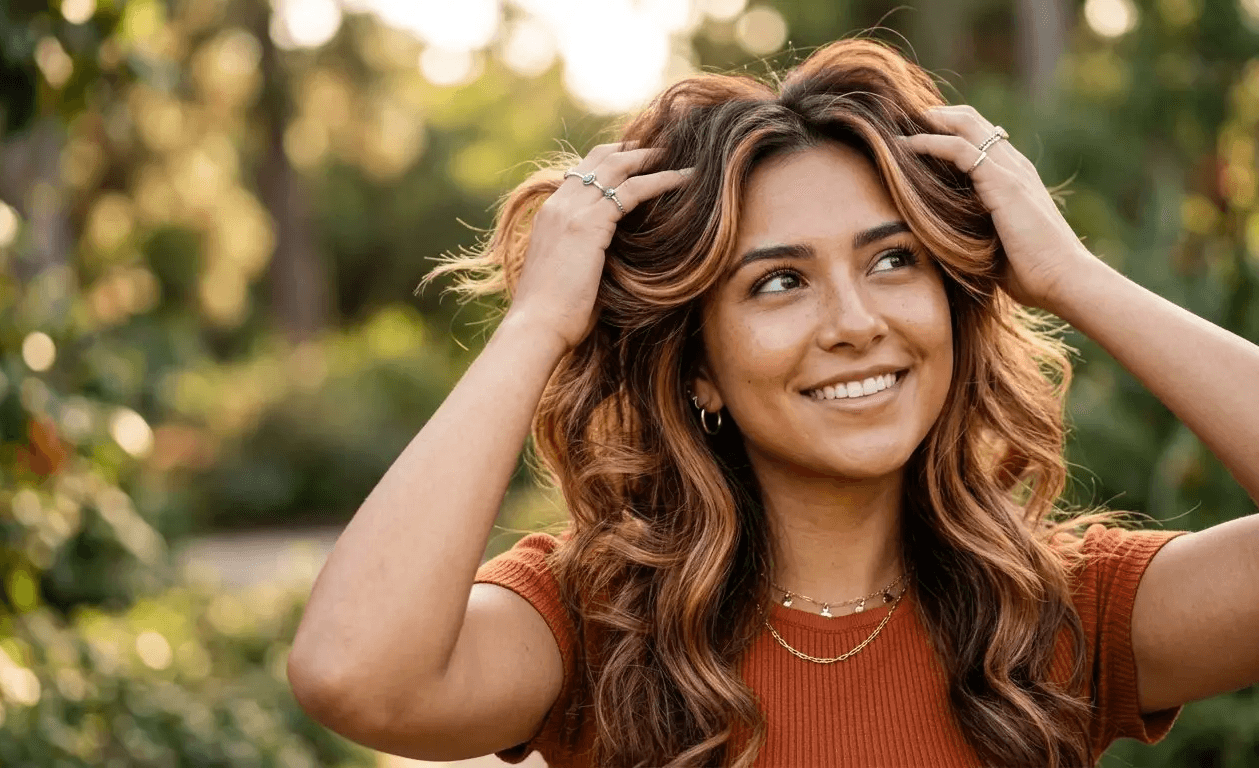
Honey, caramel, golden blonde, copper, auburn, and rich chocolate browns are the most flattering hair colors for warm undertones. These shades echo the warmth already in your skin and create a cohesive, sun-kissed look that feels natural instead of forced.
If you have warm undertones and you're trying lived-in color for the first time, a caramel or honey balayage is one of the easiest places to start. It grows out softly, needs very little upkeep, and tends to look like your hair just got more interesting over the summer.
What to skip: overly cool, ashy, or platinum shades. They can leave warm skin looking washed out, even when the color itself is gorgeous.
Best Hair Colors for Cool Undertones
Ash blonde, platinum, cool brown, mocha, and blue-black tones are usually the most flattering for cool undertones. These shades balance the pink or blue in your skin rather than competing with it.
Glosses and toners are especially useful here. A single gloss can neutralize brassiness and bring out cool dimension in color you already have. If your color keeps pulling warm or orange, a toning service might be all you actually need.
What to skip: warm reds, golden blondes, and copper. On cool undertones these can clash and throw the whole look off, even when they're applied perfectly.
Best Hair Colors for Neutral Undertones
Neutral undertones are the most flexible of all, which means you get to chase what you genuinely love rather than follow a strict formula.
That said, neutral skin tends to look especially good in soft, blended shades: beige blonde, mushroom brown, soft chestnut, and any kind of lived-in, dimensional color. These don't lean hard in either direction, so they complement the balance already in your skin.
How Your Undertone Shapes Balayage and Lived-In Color
This is where undertone really earns its keep. When I place a balayage or lived-in color, I choose the highlight and toner shades around your undertone, so the grow-out stays soft and the finish looks natural on you specifically, not just pretty in a photo. A warm client might get honey and caramel woven through. A cool client might get a cooler beige with a toner to keep brass at bay. Same technique, very different recipe, and undertone is the reason.
FAQ
How do I know if I have warm, cool, or neutral undertones? Check the veins on your inner wrist in natural light. Green suggests warm, blue or purple suggests cool, and a mix usually means neutral. Jewelry is another clue: gold flatters warm, silver flatters cool, and both look fine on neutral.
Should I match my hair color to my skin tone? People often call it matching, but you aren't copying your skin's color. You're choosing a shade that complements your undertone so the two look good together. A warm shade on warm skin reads cohesive, and a thoughtfully chosen cool shade can still look beautiful with the right toner. The goal is harmony, not a literal color match.
What hair color is best for fair skin with cool undertones? Ash blonde, platinum, and soft cool browns tend to be the most flattering. Warm golds and coppers can make cool, fair skin look uneven, so they're usually best avoided.
What about olive or deep skin? Olive skin often reads neutral to warm, so golden and beige tones glow while very ashy shades can look dull. Deep skin shines in rich, saturated colors like espresso, deep auburn, and bold honey over a darker base. In both cases, your undertone still sets the direction.
Does my skin tone affect how balayage looks? Yes. The warmth or coolness of the shades chosen for a balayage should complement your undertone, which is exactly what a colorist factors in when selecting highlight and toner tones. That's how the final result looks natural on you, not just lovely in the abstract.
Can I wear a color that doesn't suit my undertone? You can, and sometimes the contrast is intentional. A warm-toned person can absolutely wear a cool platinum when it's done thoughtfully, usually with the right toner. Your undertone is a smart default, not a hard rule.
Your undertone is a starting point, not a rulebook. The goal is color that makes you look like yourself on a really good day. If you want help finding yours, I offer color consultations here in Georgetown, TX. Book online and we'll find your perfect shade together.
How to Choose the Right Hair Color for Your Skin Tone (Warm, Cool & Neutral)
The secret to hair color that actually flatters you isn't the trend on your Pinterest board or the shade that looked amazing on your friend. It comes down to your skin's undertone. After years behind the chair here in Georgetown, this is one of the first things I look at before any color appointment, because once you know whether you run warm, cool, or neutral, the right direction gets a lot clearer.
Here's how to figure out your undertone, factor in your skin's depth, and choose a color that genuinely works with both.
Skin Tone and Undertone Are Two Different Things
Your skin tone is what you see on the surface: fair, medium, or deep. Your undertone is the quieter hue sitting underneath it, and unlike a summer tan, it doesn't shift with the seasons. That undertone is what we're really working with when we choose a color, which is why two people with the same "medium" skin can suit completely different shades.
How to Find Your Undertone
The easiest check: look at the veins on the inside of your wrist in natural light. Greenish veins usually mean warm undertones. Blue or purple veins lean cool. A mix of both, and you're probably neutral.
Another quick clue is how your skin looks against gold versus silver jewelry. Gold tends to flatter warm undertones, silver tends to flatter cool ones, and if both look great on you, neutral is a safe bet.
These aren't lab tests, but they get most people in the right ballpark.
Factor In Your Skin's Depth, Too
Undertone tells you the direction to go. Your skin's depth, meaning how fair or deep you are, helps fine-tune how light or rich to take it.
Fair skin: softer, lower-contrast colors usually look most natural. Going very dark can feel harsh against fair skin.
Medium skin: the most flexible depth. Caramels, "bronde", and rich browns all tend to land beautifully.
Olive skin: often reads neutral to warm. Golden and beige tones make olive skin glow, while very ashy shades can fall a little flat.
Deep skin: rich, saturated colors really shine here, think espresso, deep auburn, jet, and bold honey worked over a darker base.
Pairing your depth with your undertone is how you land on a color that looks like it simply grew that way.
Best Hair Colors for Warm Undertones
Honey, caramel, golden blonde, copper, auburn, and rich chocolate browns are the most flattering hair colors for warm undertones. These shades echo the warmth already in your skin and create a cohesive, sun-kissed look that feels natural instead of forced.
If you have warm undertones and you're trying lived-in color for the first time, a caramel or honey balayage is one of the easiest places to start. It grows out softly, needs very little upkeep, and tends to look like your hair just got more interesting over the summer.
What to skip: overly cool, ashy, or platinum shades. They can leave warm skin looking washed out, even when the color itself is gorgeous.
Best Hair Colors for Cool Undertones
Ash blonde, platinum, cool brown, mocha, and blue-black tones are usually the most flattering for cool undertones. These shades balance the pink or blue in your skin rather than competing with it.
Glosses and toners are especially useful here. A single gloss can neutralize brassiness and bring out cool dimension in color you already have. If your color keeps pulling warm or orange, a toning service might be all you actually need.
What to skip: warm reds, golden blondes, and copper. On cool undertones these can clash and throw the whole look off, even when they're applied perfectly.
Best Hair Colors for Neutral Undertones
Neutral undertones are the most flexible of all, which means you get to chase what you genuinely love rather than follow a strict formula.
That said, neutral skin tends to look especially good in soft, blended shades: beige blonde, mushroom brown, soft chestnut, and any kind of lived-in, dimensional color. These don't lean hard in either direction, so they complement the balance already in your skin.
How Your Undertone Shapes Balayage and Lived-In Color
This is where undertone really earns its keep. When I place a balayage or lived-in color, I choose the highlight and toner shades around your undertone, so the grow-out stays soft and the finish looks natural on you specifically, not just pretty in a photo. A warm client might get honey and caramel woven through. A cool client might get a cooler beige with a toner to keep brass at bay. Same technique, very different recipe, and undertone is the reason.
FAQ
How do I know if I have warm, cool, or neutral undertones? Check the veins on your inner wrist in natural light. Green suggests warm, blue or purple suggests cool, and a mix usually means neutral. Jewelry is another clue: gold flatters warm, silver flatters cool, and both look fine on neutral.
Should I match my hair color to my skin tone? People often call it matching, but you aren't copying your skin's color. You're choosing a shade that complements your undertone so the two look good together. A warm shade on warm skin reads cohesive, and a thoughtfully chosen cool shade can still look beautiful with the right toner. The goal is harmony, not a literal color match.
What hair color is best for fair skin with cool undertones? Ash blonde, platinum, and soft cool browns tend to be the most flattering. Warm golds and coppers can make cool, fair skin look uneven, so they're usually best avoided.
What about olive or deep skin? Olive skin often reads neutral to warm, so golden and beige tones glow while very ashy shades can look dull. Deep skin shines in rich, saturated colors like espresso, deep auburn, and bold honey over a darker base. In both cases, your undertone still sets the direction.
Does my skin tone affect how balayage looks? Yes. The warmth or coolness of the shades chosen for a balayage should complement your undertone, which is exactly what a colorist factors in when selecting highlight and toner tones. That's how the final result looks natural on you, not just lovely in the abstract.
Can I wear a color that doesn't suit my undertone? You can, and sometimes the contrast is intentional. A warm-toned person can absolutely wear a cool platinum when it's done thoughtfully, usually with the right toner. Your undertone is a smart default, not a hard rule.
Your undertone is a starting point, not a rulebook. The goal is color that makes you look like yourself on a really good day. If you want help finding yours, I offer color consultations here in Georgetown, TX. Book online and we'll find your perfect shade together.