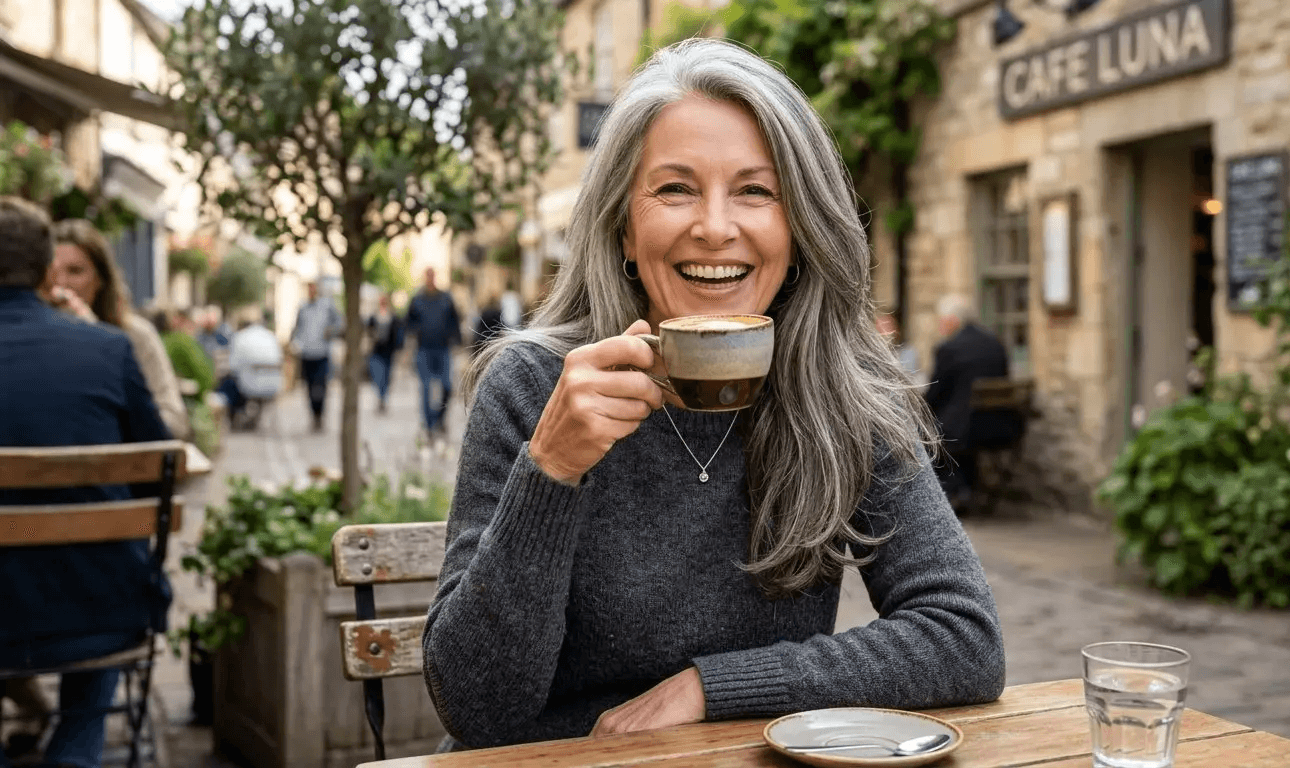
The Benefits of Embracing Your Natural Hair Texture
Most of us have spent years fighting our hair. Straightening what's wavy. Blowing out what's curly. Chasing something different than what grew out of our heads. But here's what a lot of women are figuring out: working with your natural hair texture instead of against it isn't settling — it's actually a smarter, healthier, more sustainable way to have great hair. The benefits of embracing your natural hair texture go beyond saving time in the morning. Your hair gets healthier, your style gets easier, and honestly? The results tend to look more like you.
What Natural Hair Texture Looks Like Across Different Hair Types
Natural hair texture isn't one thing. It's the pattern, density, and behavior your hair has when you let it do what it wants — no heat, no product forcing it into a shape it wasn't born with.
For some women that's a gentle wave that shows up when hair air dries. For others it's a tight spiral, a loose curl, or a straight-but-fine texture that lies flat. None of these are better or worse. They're just different starting points.
The problem most women run into is that they've spent so long altering their texture that they've forgotten what it actually looks like. Years of daily heat styling can loosen curl patterns. Chemical relaxers permanently change the structure. Even heavy product use can mask what's naturally there.
Getting back to your baseline — even temporarily — is worth it. It's hard to work with your texture until you actually see it.
Why Fighting Your Natural Texture Costs You More Than You Think
The obvious cost is time. If you're spending 45 minutes every morning with a flat iron or a diffuser trying to coax your hair into a shape it doesn't want to be in, that adds up fast.
If your hair needs extra help getting back to a healthy baseline, a Smooth Filler Treatment is worth looking into. It's a lightweight in-salon treatment that fills and refines dry, rough areas from the inside out — not by coating the hair, but by actually improving its texture. It won't change your natural pattern, but it makes it easier to work with. Think softer, shinier hair that behaves better with less effort.
But the less obvious cost is damage. Heat styling at high temperatures — especially daily — breaks down the protein structure of your hair over time. You end up with strands that are drier, more brittle, and more prone to breakage. Then you need more products to compensate for the damage, more treatments to restore softness, and more frequent trims to keep split ends in check.
It becomes a cycle that's expensive and exhausting.
When you stop fighting your texture and start working with it, a lot of that maintenance falls away on its own. You're not patching damage you caused — you're just taking care of healthy hair.
How Embracing Your Natural Texture Changes the Way You Color Your Hair
This is where it gets interesting for color clients. Your natural texture actually has a huge influence on how color should be applied and how it behaves once it's in.
Curly and wavy hair reflects light differently than straight hair. That means color techniques like balayage and lived-in color tend to look more dimensional and natural on textured hair — the color moves with the curl pattern instead of sitting flat. Straight hair can pull those same techniques beautifully, but the look lands differently.
When a colorist understands your texture from the start, they can place color in a way that enhances what you already have. The result looks like your hair at its best — not like a color job that's fighting against the shape of your hair.
Low-maintenance color also pairs really well with natural texture because neither requires you to do much. Lived-in color is designed to grow out gracefully. Natural texture is designed to look good without heat. Together, they create a style that's genuinely easy to maintain — not just marketed as easy.
Practical Ways to Start Working With Your Texture
You don't have to go cold turkey on your flat iron to start seeing the benefits. A few small shifts make a real difference.
Start by letting your hair air dry once or twice a week. See what comes through. Most women are surprised — their texture is softer or more defined than they expected.
Swap one heat tool for a diffuser if you have any wave or curl. A diffuser enhances your natural pattern without pulling it out. It also cuts down on the direct heat that causes the most damage.
Use products that work with your texture rather than coating it. Lightweight curl creams and leave-ins for wavy and curly hair. Volumizing products for fine, straight hair that goes limp. The right product makes it easier to like what you have.
And talk to your colorist about it. If you're moving toward embracing your natural texture, that should change how your color is approached. A good stylist will adjust their technique based on where you're headed, not just where you've been.
FAQ
What does "natural hair texture" mean?
Natural hair texture refers to the pattern, shape, and behavior of your hair when it's free from heat styling, chemical processing, or products that alter its natural state. It's what your hair does on its own.
Is embracing natural texture the same as going heat-free?
Not necessarily. It means learning what your hair's natural pattern is and working with it — not against it. You can still use heat occasionally without fighting your texture every single day.
How does natural texture affect balayage or lived-in color?
Your texture influences how color sits and reflects light. A colorist who understands your texture can place color in a way that moves naturally with your hair pattern, making the result look more dimensional and effortless.
Can color-treated hair still have healthy natural texture?
Yes — especially with lower-maintenance techniques like balayage or lived-in color. These methods are gentler on the hair and designed to grow out naturally, which means less frequent processing and healthier strands over time.
What's the best first step for someone wanting to embrace their natural texture?
Let your hair air dry a few times and see what comes through. Once you know your actual texture, it's much easier to choose the right products, styling approach, and color technique to work with it.
If you've been curious about a color approach that works with your hair rather than requiring you to maintain a look your hair doesn't naturally want to hold, lived-in color might be exactly what you're after. At Tresses by Candace in Georgetown, TX, that's the kind of color work Candace specializes in — results that grow out beautifully and actually fit your real life. If you're ready to explore what that could look like for you, reach out to book a consultation.
The Benefits of Embracing Your Natural Hair Texture
Most of us have spent years fighting our hair. Straightening what's wavy. Blowing out what's curly. Chasing something different than what grew out of our heads. But here's what a lot of women are figuring out: working with your natural hair texture instead of against it isn't settling — it's actually a smarter, healthier, more sustainable way to have great hair. The benefits of embracing your natural hair texture go beyond saving time in the morning. Your hair gets healthier, your style gets easier, and honestly? The results tend to look more like you.
What Natural Hair Texture Looks Like Across Different Hair Types
Natural hair texture isn't one thing. It's the pattern, density, and behavior your hair has when you let it do what it wants — no heat, no product forcing it into a shape it wasn't born with.
For some women that's a gentle wave that shows up when hair air dries. For others it's a tight spiral, a loose curl, or a straight-but-fine texture that lies flat. None of these are better or worse. They're just different starting points.
The problem most women run into is that they've spent so long altering their texture that they've forgotten what it actually looks like. Years of daily heat styling can loosen curl patterns. Chemical relaxers permanently change the structure. Even heavy product use can mask what's naturally there.
Getting back to your baseline — even temporarily — is worth it. It's hard to work with your texture until you actually see it.
Why Fighting Your Natural Texture Costs You More Than You Think
The obvious cost is time. If you're spending 45 minutes every morning with a flat iron or a diffuser trying to coax your hair into a shape it doesn't want to be in, that adds up fast.
If your hair needs extra help getting back to a healthy baseline, a Smooth Filler Treatment is worth looking into. It's a lightweight in-salon treatment that fills and refines dry, rough areas from the inside out — not by coating the hair, but by actually improving its texture. It won't change your natural pattern, but it makes it easier to work with. Think softer, shinier hair that behaves better with less effort.
But the less obvious cost is damage. Heat styling at high temperatures — especially daily — breaks down the protein structure of your hair over time. You end up with strands that are drier, more brittle, and more prone to breakage. Then you need more products to compensate for the damage, more treatments to restore softness, and more frequent trims to keep split ends in check.
It becomes a cycle that's expensive and exhausting.
When you stop fighting your texture and start working with it, a lot of that maintenance falls away on its own. You're not patching damage you caused — you're just taking care of healthy hair.
How Embracing Your Natural Texture Changes the Way You Color Your Hair
This is where it gets interesting for color clients. Your natural texture actually has a huge influence on how color should be applied and how it behaves once it's in.
Curly and wavy hair reflects light differently than straight hair. That means color techniques like balayage and lived-in color tend to look more dimensional and natural on textured hair — the color moves with the curl pattern instead of sitting flat. Straight hair can pull those same techniques beautifully, but the look lands differently.
When a colorist understands your texture from the start, they can place color in a way that enhances what you already have. The result looks like your hair at its best — not like a color job that's fighting against the shape of your hair.
Low-maintenance color also pairs really well with natural texture because neither requires you to do much. Lived-in color is designed to grow out gracefully. Natural texture is designed to look good without heat. Together, they create a style that's genuinely easy to maintain — not just marketed as easy.
Practical Ways to Start Working With Your Texture
You don't have to go cold turkey on your flat iron to start seeing the benefits. A few small shifts make a real difference.
Start by letting your hair air dry once or twice a week. See what comes through. Most women are surprised — their texture is softer or more defined than they expected.
Swap one heat tool for a diffuser if you have any wave or curl. A diffuser enhances your natural pattern without pulling it out. It also cuts down on the direct heat that causes the most damage.
Use products that work with your texture rather than coating it. Lightweight curl creams and leave-ins for wavy and curly hair. Volumizing products for fine, straight hair that goes limp. The right product makes it easier to like what you have.
And talk to your colorist about it. If you're moving toward embracing your natural texture, that should change how your color is approached. A good stylist will adjust their technique based on where you're headed, not just where you've been.
FAQ
What does "natural hair texture" mean?
Natural hair texture refers to the pattern, shape, and behavior of your hair when it's free from heat styling, chemical processing, or products that alter its natural state. It's what your hair does on its own.
Is embracing natural texture the same as going heat-free?
Not necessarily. It means learning what your hair's natural pattern is and working with it — not against it. You can still use heat occasionally without fighting your texture every single day.
How does natural texture affect balayage or lived-in color?
Your texture influences how color sits and reflects light. A colorist who understands your texture can place color in a way that moves naturally with your hair pattern, making the result look more dimensional and effortless.
Can color-treated hair still have healthy natural texture?
Yes — especially with lower-maintenance techniques like balayage or lived-in color. These methods are gentler on the hair and designed to grow out naturally, which means less frequent processing and healthier strands over time.
What's the best first step for someone wanting to embrace their natural texture?
Let your hair air dry a few times and see what comes through. Once you know your actual texture, it's much easier to choose the right products, styling approach, and color technique to work with it.
If you've been curious about a color approach that works with your hair rather than requiring you to maintain a look your hair doesn't naturally want to hold, lived-in color might be exactly what you're after. At Tresses by Candace in Georgetown, TX, that's the kind of color work Candace specializes in — results that grow out beautifully and actually fit your real life. If you're ready to explore what that could look like for you, reach out to book a consultation.